
A digital fingerprint can help identify someone without recording their name. Privacy concerns with electronic fingerprinting arise when distinctive device or browser details are combined with other information, such as location and demographic data, to infer who is using a device.
It helps to distinguish this kind of tracking from electronic fingerprint capture for a background check: the term can describe different processes. Here, the focus is device and browser fingerprinting, and how linked data can make an otherwise anonymous profile more identifiable. You’ll learn which details contribute to that link, why resetting cookies may not erase a device identifier, and what privacy risks can follow when location or demographic information is added. The goal is to explain indirect identification without overstating what a digital fingerprint alone reveals.
Indirect identification and privacy risks
Electronic fingerprinting can describe different processes. A Live Scan fingerprint is a biometric record; a browser fingerprint is a profile built from device and browser attributes. Combining browser details can make a device persistently identifiable, even after cookies are reset. Confusing these processes can obscure what information is collected and why.
Linkage creates the broader privacy risk. A device profile combined with location history and demographic details may point to a person without recording their name. For example, repeated visits from one device to a workplace or clinic can reveal patterns. The same data could support surveillance across sites or help someone build a profile for identity theft attempts. A fingerprint alone does not establish who used the device.
Compared with ink, electronic capture creates a digital record that can be stored and transmitted electronically. Ink creates a physical impression that can also be copied or digitized. Neither method alone determines privacy risk; access, storage, sharing, and retention practices matter.
Rights to access, correct, or delete a record depend on the applicable jurisdiction, purpose, and record holder. Employment and licensing records may follow different processes. Direct requests to the agency or organization responsible for the specific record; don’t assume every record can be deleted on request.
Yes. Practices can vary by state and purpose, such as employment or licensing. The requesting program and the agency handling a submission determine which process applies. A licensing submission and an employment check may therefore involve different recipients or procedures.
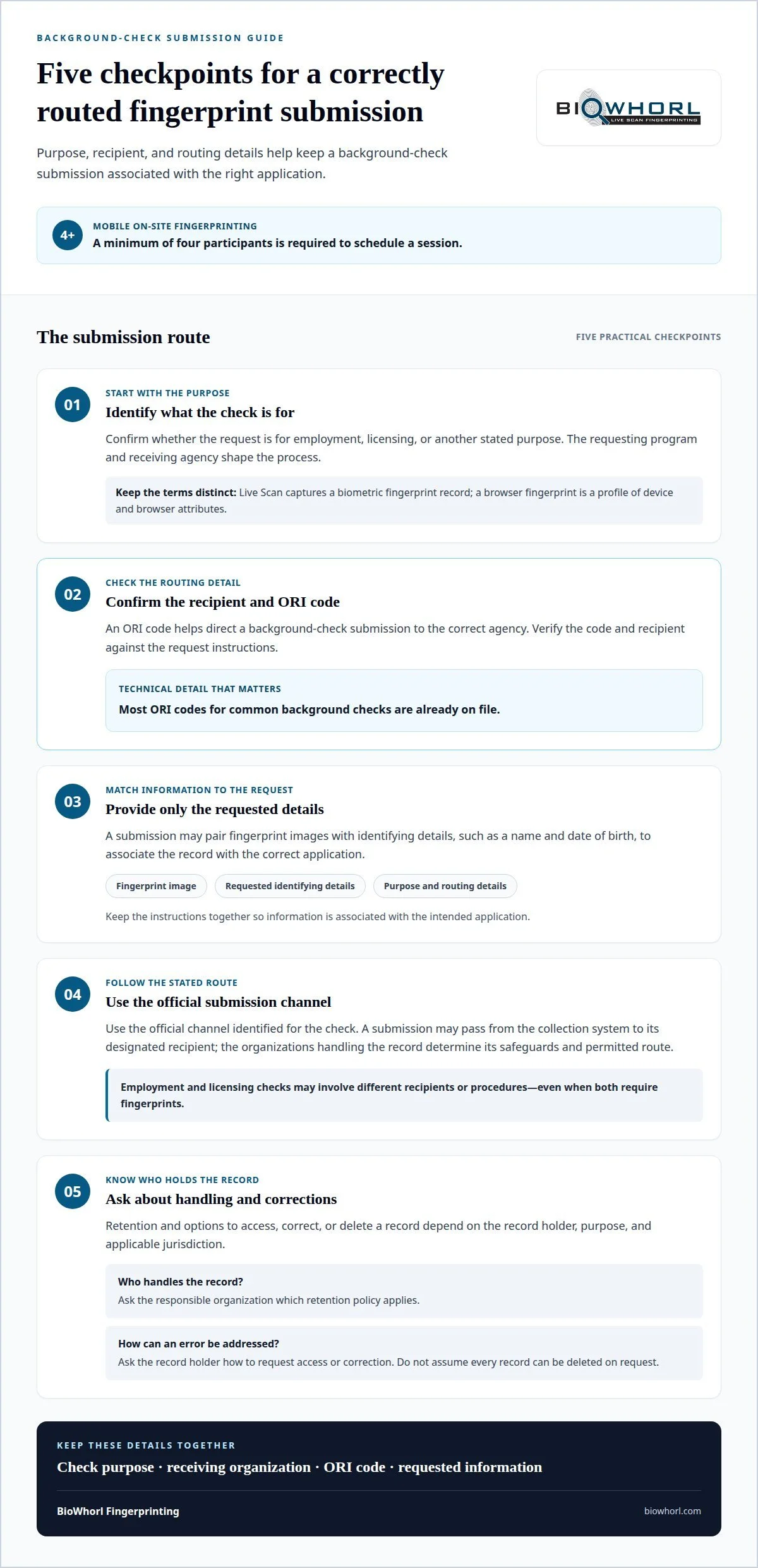
Before fingerprinting, take practical steps: confirm the purpose and receiving organization, provide only the requested information, and ask who handles the record and how to request a correction. Use the official submission channel identified for the check. These steps clarify where the data goes and how to address an error.
Combining fingerprints with location and demographic data
A biometric fingerprint and a digital device fingerprint are different records. A biometric record captures fingerprint characteristics, while a browser fingerprint combines device and browser attributes. Privacy concerns with electronic fingerprinting can arise when biometric information is linked with other identifying records. Separately, linking device data with location history and demographic details can narrow an anonymous profile. For example, repeated activity near a workplace may add identifying context.
Retention depends on the record holder and the purpose of collection. An employer, government agency, and fingerprint vendor may follow different schedules. Ask the responsible organization which retention policy applies and how to request access or correction. The answer depends on the specific record and its holder, not simply on whether the fingerprint was captured electronically.
U.S. rules for collecting and using fingerprint data can vary by state and purpose, including employment or licensing. The requesting program and receiving agency shape the process. Privacy concerns with electronic fingerprinting therefore include understanding which organization receives the submission and what purpose it serves.
Electronic records move through digital systems, but storage formats, encryption, access controls, and sharing channels vary. A submission may pass from the collection system to its designated recipient. The organizations handling the record determine the technical safeguards and permitted route.
Use beyond the original background-check purpose depends on the authority and purpose governing that record. Collection alone does not establish permission for every later use. Keep the stated purpose and recipient with the submission details. An employment check and a licensing check, for example, may have different recipients and processing requirements.
Digital fingerprints can indirectly identify users when device and browser attributes are combined and analyzed. Blocking JavaScript restricts many data points used to create digital fingerprints, but it can prevent some websites from working. The privacy benefit may therefore come with a usability cost.
What personal information is collected during electronic fingerprinting?
A fingerprint appointment can involve more than an image of your fingers. The information collected depends on the background-check purpose and the receiving agency’s instructions. A submission may pair fingerprint images with identifying details, such as a name and date of birth, to associate the record with the correct application. Privacy concerns with electronic fingerprinting often involve how these separate details are combined and handled.
The fingerprint image is biometric information. A transaction may also include the check’s purpose and routing details for its intended recipient. An ORI code is one such detail, helping direct a background-check submission to the correct agency. These records identify the application’s destination, not just the person being fingerprinted.
Before capture, establish which organization requested the check and whether it is for employment or licensing. Those details help clarify which information belongs with the submission. For example, an application for a professional license may follow a different route from an employment screening, even when both require fingerprints.
Privacy concerns with electronic fingerprinting also make it useful to understand which organization receives the record and what information travels with it. Keep the request instructions together, including the stated purpose and routing details. This can help prevent information from being associated with the wrong application.
For a Florida background check, review electronic fingerprinting service details and the submission process.
For broader privacy context, the European Union’s General Data Protection Regulation requires users to opt in to data collection. The European Union says the GDPR applies to processing an EU citizen’s personal data regardless of where in the world the person is when the data is processed.
In a recent survey, 83% of consumers said they were willing to share data with brands to receive a personalized experience. That finding does not determine what information a fingerprint submission should contain, so the specific request instructions remain important.
BioWhorl Fingerprinting
BioWhorl Fingerprinting helps people complete electronic fingerprinting and background-check submissions for employment or licensing. Clear submission details matter: the correct ORI code helps route a background check to its intended recipient. Most ORI codes for common background checks are already on file, supporting a streamlined process.
Available services include Level 2 Live Scan Fingerprinting, FDLE and FBI Background Check Submission, AHCA Photo Submission, and Florida Department of Education background checks. Mobile On-site Fingerprinting is available for groups, with a minimum of four participants required to schedule a session.
If you’re arranging a check and need fingerprinting support, contact BioWhorl Fingerprinting to discuss the submission process.
Make Your Next Fingerprinting Step Clear
Addressing privacy concerns with electronic fingerprinting starts with understanding the purpose of your appointment and the organization requesting it. Keep the relevant instructions together as you prepare. This gives you a clear reference for the process and helps you focus on the information required for your specific application.
BioWhorl Fingerprinting offers Level 2 Live Scan Fingerprinting, Mobile On-site Fingerprinting, and FDLE and FBI Background Check Submission. These services support people completing employment or licensing requirements, with submissions routed according to the requesting agency’s process.
When you’re ready to arrange fingerprinting or a background-check submission, contact BioWhorl Fingerprinting to discuss the service that fits your needs. A clear next step can make the process easier to manage.
Frequently Asked Questions
What are the risks of fingerprint data breaches and identity theft?
A breach could expose fingerprint records alongside identifying details, making it easier to connect biometric information to a specific person or misuse that person’s identity. For example, stolen records may help someone make convincing impersonation attempts. Exposure does not automatically enable identity theft, but biometric data is sensitive and cannot be treated like a password that can simply be changed. If notified of a breach, follow the record holder’s instructions and watch for suspicious account or identity activity.
What U.S. federal and state laws regulate the collection and use of fingerprint data?
U.S. rules vary by state and purpose, including employment or licensing. The requesting program and receiving agency shape the process.