Florida nurses need fingerprints for a Level 2 background check as part of the licensing process. FDLE nurse fingerprints are submitted electronically, and Florida’s expanded healthcare screening requirement took effect July 1, 2025. Nurses arranging fingerprinting should use the ORI code assigned for their background check, since it directs the results to the right agency.
Choose a fingerprinting option that suits your schedule and group size. Mobile On-site Fingerprinting requires a minimum of four participants, and we bring the equipment to your location. This guide explains who needs Live Scan for nursing, how the process works, why ORI codes matter, and when a mobile session may be a practical fit.
What are FDLE Fingerprinting Services?
Florida healthcare licensing uses fingerprint-based Level 2 background checks. The correct ORI code connects each submission to its purpose and receiving agency.
Healthcare License Applicant Screening
Applicants submit fingerprints electronically for a Level 2 check that compares records across state and national criminal databases. Florida screening includes FDLE and FBI checks; the background-check purpose determines where results go. Out-of-state nurses can submit fingerprints for Florida licensure through electronic capture using the Florida agency’s assigned ORI code. That code is essential: using one for another purpose can misroute the results.
Fingerprinting for Nurses and Licensed Professionals
Registered nurses, licensed practical nurses, and advanced practice registered nurses may need fingerprint-based screening for Florida licensure. Requirements vary by profession and licensing agency. If you are applying for an RN license by exam, use the ORI code assigned to that application route. For a multistate-license upgrade, follow the ORI instructions for that process rather than assuming the exam code applies.
Florida does not use one Live Scan ORI code for every nursing application. The agency assigns a code based on the check’s purpose and specifies which one applicants must use.
Renewal Screening and Fingerprint Validity
Florida’s expanded healthcare screening requirements took effect July 1, 2025. Already licensed healthcare professionals are screened at their next license renewal, with screening required at every renewal under the expanded requirements. Fingerprint retention is called for every 5 years. FDLE fingerprint results are generally valid for five years for Florida licensure; agency requirements can affect whether an earlier submission applies.
Criminal Record Results and Rejected Prints
A criminal-history result is reviewed within the licensing background-check process; fingerprinting itself does not decide whether a person qualifies for a license. Florida HB 975 added eight new disqualifying offenses to healthcare screening effective July 1, 2025. If prints are rejected because of poor quality or another issue, the person is typically notified and asked to submit them again. A rejected capture is different from a criminal-record result.
Who Needs Live Scan fingerprinting?
Florida Live Scan is used for background checks tied to licensing, hiring, and agency requirements. Nurses, massage therapists applying for state licenses, and realtors may need FDLE screening. Insurance brokers sometimes need it, too. Volunteers at qualified organizations serving children, older adults, or people with disabilities may also require fingerprinting. FDLE nurse fingerprints are part of the Level 2 screening required for Florida nursing applicants.
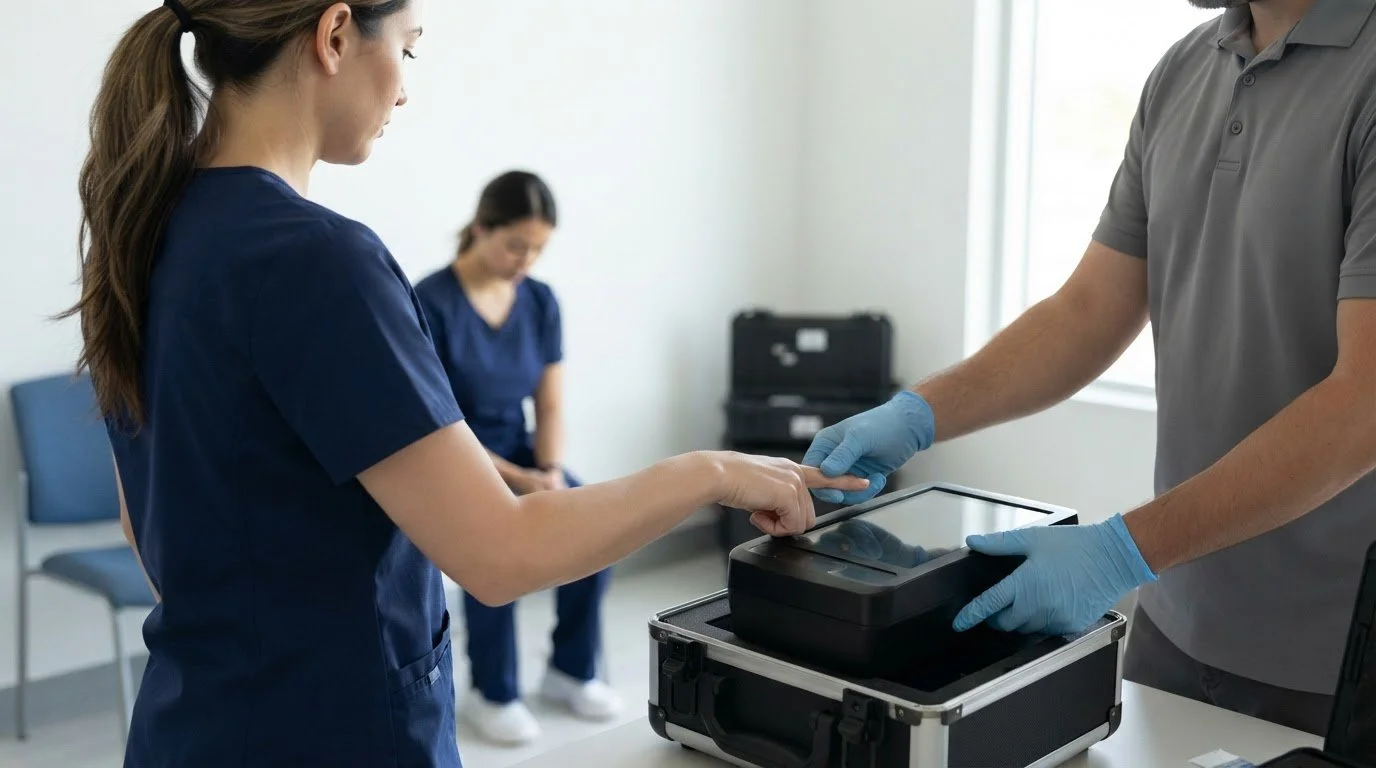
Live Scan captures and submits fingerprints electronically. Florida nurse fingerprinting for a background check must be completed by a provider authorized to capture and submit fingerprints electronically. Requirements depend on the screening purpose, such as a nursing license application or employment check. For FDLE nurse fingerprints, follow the instructions for your specific application and use its designated ORI and OCA codes to route the results to the appropriate agency.
Bring identification that meets the requesting agency’s requirements, along with its application or screening instructions. Make sure the name and identifying details for the submission match your application. Requirements vary by agency and purpose, so follow the directions for your specific background check.
An Originating Agency Identifier, or ORI, is a nine-character code assigned to an agency. It identifies the reason for the check and directs results to the right destination. Use the ORI provided for your application or hiring process. A mismatched code can send results under the wrong screening purpose.
Mobile On-site Fingerprinting requires a minimum of four participants. It suits organizations arranging screening for a group. For mobile on-site service, we bring the equipment to your location. Individual applicants can schedule a Live Scan appointment.
Mobile FDLE fingerprinting services
Mobile fingerprinting brings electronic capture to a group at an agreed location. In Florida, FDLE fingerprinting must use an approved service provider authorized to capture and submit fingerprints electronically. The provider collects prints for the stated background-check purpose, then submits them through the appropriate process. This is a practical option when several nurses or employees need screening together.
Mobile On-site Fingerprinting requires a minimum of four participants. A clinic coordinating nurse licensing checks or an employer arranging hiring screenings can gather participants for one session. We bring the equipment to your location. Individual applicants and groups with fewer than four participants can schedule an individual Live Scan appointment.
Accurate routing depends on using the ORI and OCA codes for the correct agency and screening purpose. Most codes for common background checks are already on file, while the agency’s instructions remain essential for less common requests. A criminal history check may not be routed correctly if the code does not match the intended screening.
Before a group session, organize each person’s agency instructions and identification details. Each submission needs the correct screening purpose and ORI/OCA codes. This helps prevent different licensing or employment checks from being treated as interchangeable. Mobile service changes where fingerprint capture happens, not which agency receives the results or what the background check covers.
For a group of four or more, arrange Mobile On-site Fingerprinting for the screening session.
BioWhorl Fingerprinting: Level 2 Live Scan Fingerprinting
BioWhorl Fingerprinting provides Level 2 Live Scan Fingerprinting and FDLE and FBI Background Check Submission for nurses completing licensing checks. For FDLE nurse fingerprints, the correct ORI code helps route the submission for its intended purpose. Most ORI codes for common background checks are already on file.
Nurses coordinating FDLE nurse fingerprints can use Live Scan for electronic capture and submission. Groups may arrange Mobile On-site Fingerprinting, which requires at least four participants. AHCA Photo Submission is also available for applicable screening requirements.
Contact BioWhorl Fingerprinting to arrange Level 2 Live Scan fingerprinting for your licensing or background-check needs.
Set Up Your Next Screening Step
Before arranging FDLE fingerprints for nurses, keep the licensing purpose and assigned ORI code together. That gives the electronic submission the technical detail needed to route the background check correctly. For an individual appointment, Level 2 Live Scan can handle the fingerprint capture and submission. Organizations coordinating group screening can consider Mobile On-site Fingerprinting, while FDLE and FBI Background Check Submission supports the electronic processing step.
BioWhorl Fingerprinting offers these services for applicants and organizations managing screening logistics. Choose the option that fits your situation, then get in touch to discuss the next step. A clear submission purpose helps keep the process organized from the start.
Contact BioWhorl Fingerprinting to arrange your fingerprinting service and move forward with confidence.
Frequently Asked Questions
How do I get fingerprinted in Florida?
Start with the agency’s instructions for your license, job, or other screening purpose. They identify the correct ORI and OCA codes and any required paperwork. Then schedule electronic Live Scan fingerprinting and bring the required identification. BioWhorl serves the Tampa area, including St. Petersburg, Plant City, and Clearwater, and routes results to the appropriate agency through the designated codes.
What is a Level 2 Background Check in Florida?
A Florida Level 2 Background Check is a fingerprint-based screening that checks state and national criminal records. It includes FDLE and FBI checks, and may include county criminal records through local law enforcement agencies or courts. For a nurse’s licensing application, the agency’s ORI code identifies the screening purpose and routes results to that agency.
How do I find out if the agency for which I was fingerprinted actually received the response?
Contact the agency that requested your background check to confirm receipt. Results are routed to the appropriate agency through ORI/OCA codes, so verify that the submission used the correct screening purpose. If the agency has not received the response, Florida state agencies can request that FDLE resend results within six months.
How long does it take to get electronically fingerprinted?
Fingerprint capture takes place during your scheduled Live Scan appointment. The time required depends on completing identification and submission details and capturing usable prints. Have the requesting agency’s instructions and ORI/OCA codes ready so the submission is routed to the appropriate agency for the correct screening purpose. The capture appointment is separate from the time needed for results to reach the agency.
How long will it take to receive the results of my background check?
Florida Live Scan background checks are typically completed within three business days after electronic submission is received. FDLE usually sends its response to the requesting state agency within 72 hours. These processing times concern the background-check response, not a separate licensing decision. Results go to the designated agency through ORI/OCA routing, rather than directly to an applicant.